
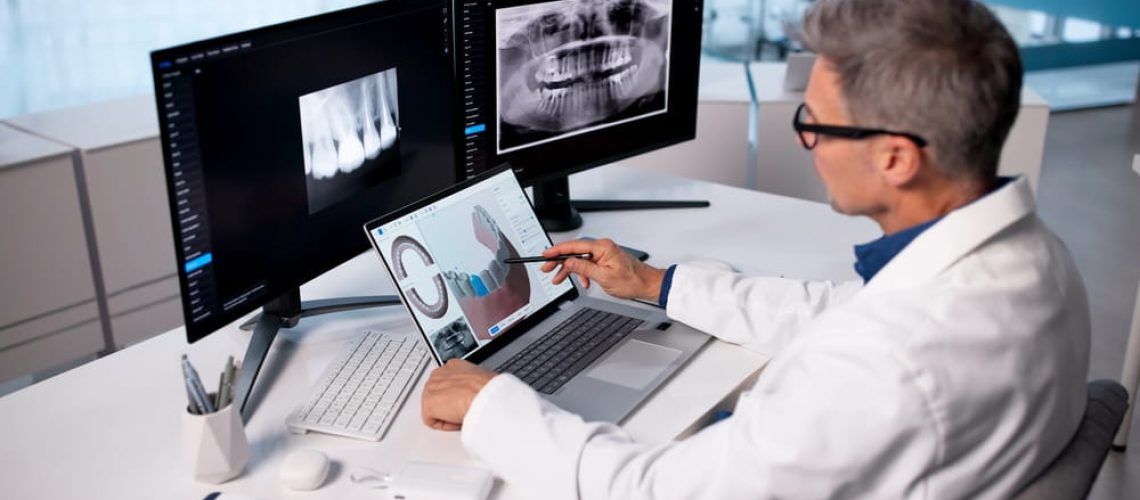
Dental technology has evolved considerably, changing how oral health conditions can be identified, monitored, and treated. Digital imaging, intraoral scanners, computer-assisted treatment planning, and advanced restorative techniques can provide dentists with detailed information while helping patients better understand their oral health. For patients in Palm City, FL, Aesthetic Dentistry of Palm City recognizes the value of patient education when exploring how modern technology is influencing dentistry and the overall treatment experience.
Technology does not replace a dentist’s clinical judgment or experience. Instead, many technologies provide additional information that dentists can use when developing individualized treatment recommendations. The National Institute of Dental and Craniofacial Research notes that digital dentistry is increasingly supporting more efficient and precise dental care, including through digital scans and three-dimensional models used for diagnosis and treatment planning.
Digital Imaging Can Enhance Diagnosis and Treatment Planning
Dental imaging is an important example of technology’s influence on patient care. Digital radiography and three-dimensional imaging can provide detailed views of teeth, bone, and surrounding oral structures. These images may assist dentists when evaluating cavities, periodontal concerns, impacted teeth, restorative needs, and other conditions that may not be fully visible during a standard examination. The American Dental Association identifies digital imaging as an important tool for evaluating dental disease and for presurgical and preorthodontic assessment.
Digital information can also support planning for more complex procedures. For example, patients considering dental implants may undergo imaging and other assessments to evaluate available bone and surrounding anatomy before treatment. Similarly, digital information may contribute to planning for full mouth reconstruction when several areas of the smile require coordinated restorative treatment.
Intraoral Scanning Is Changing Dental Impressions
Traditional dental impressions require placing impression material inside a tray and holding it in the mouth while the material sets. Although conventional impressions remain useful, intraoral scanners provide another approach. A small scanning device captures images inside the mouth and combines them to produce a detailed digital representation of the teeth and surrounding structures.
According to the American Dental Association, intraoral scanners can create digital impressions for crowns, inlays, onlays, aligners, implant surgical guides, and other restorations or appliances. They may also provide a faster and more comfortable experience for some patients than conventional impressions. Digital impressions can therefore play a role in planning treatments such as crowns and bridges, inlays and onlays, and Invisalign.
CAD/CAM Technology Supports Restorative Dentistry
Computer-aided design and computer-aided manufacturing, commonly called CAD/CAM, have also influenced restorative dentistry. Digital information collected from a patient’s mouth can be used to design restorations with software before the restoration is manufactured. This workflow can help dental professionals plan the shape, size, and fit of certain restorations with a high degree of detail.
CAD/CAM technology is commonly associated with restorations such as crowns and other ceramic treatments. The ADA reports that digital workflows involving intraoral scanners, milling systems, and related technologies can improve efficiency and reduce the time required for certain restorative procedures. However, the appropriate technique still depends on the individual case, the restoration being created, and the dentist’s clinical assessment.
Technology Can Help Patients Understand Their Dental Care
One of the less obvious benefits of digital dentistry is improved communication. Digital photographs, scans, X-rays, and three-dimensional models can give patients a clearer visual reference when discussing their oral health. Instead of relying solely on verbal explanations, patients may be able to see areas of concern and better understand why a particular treatment has been recommended.
Technology can also make it easier to compare changes over time. Digital records may help dentists monitor tooth wear, changes in alignment, restorative work, or other oral conditions during future visits. These tools can support more personalized discussions while allowing patients to participate more actively in decisions about their care.
Combining Dental Technology With Professional Expertise
New technology continues to expand what is possible in dentistry, but successful dental care still depends on appropriate diagnosis, professional expertise, and individualized treatment planning. Digital tools are most valuable when they complement careful examinations and thoughtful communication rather than being viewed as substitutes for clinical judgment.
For patients in Palm City, FL, learning about dental technology can make it easier to understand what happens before, during, and after many procedures. Aesthetic Dentistry of Palm City, with Drs. Shannon Galinis, Tom Galinis, and T.L. Plymale, encourages patients to remain informed about their oral health and the technologies that continue to shape modern dental care.
Resources
National Institute of Dental and Craniofacial Research. (2023). How Data Science and Digital Dentistry Can Improve Dental Care. National Institutes of Health.
American Dental Association. (2022). Digital Dentistry: What to Know About a Few Popular Technologies. ADA News.
Revilla-León, M., Frazier, K., da Costa, J. B., Kumar, P., Duong, M. L., Khajotia, S., & Urquhart, O. (2021). Intraoral Scanners: An American Dental Association Clinical Evaluators Panel Survey. The Journal of the American Dental Association, 152(8), 669–670.e2.